
Gerda Bengtsson / Gerda Bengtsson (1900-1995)
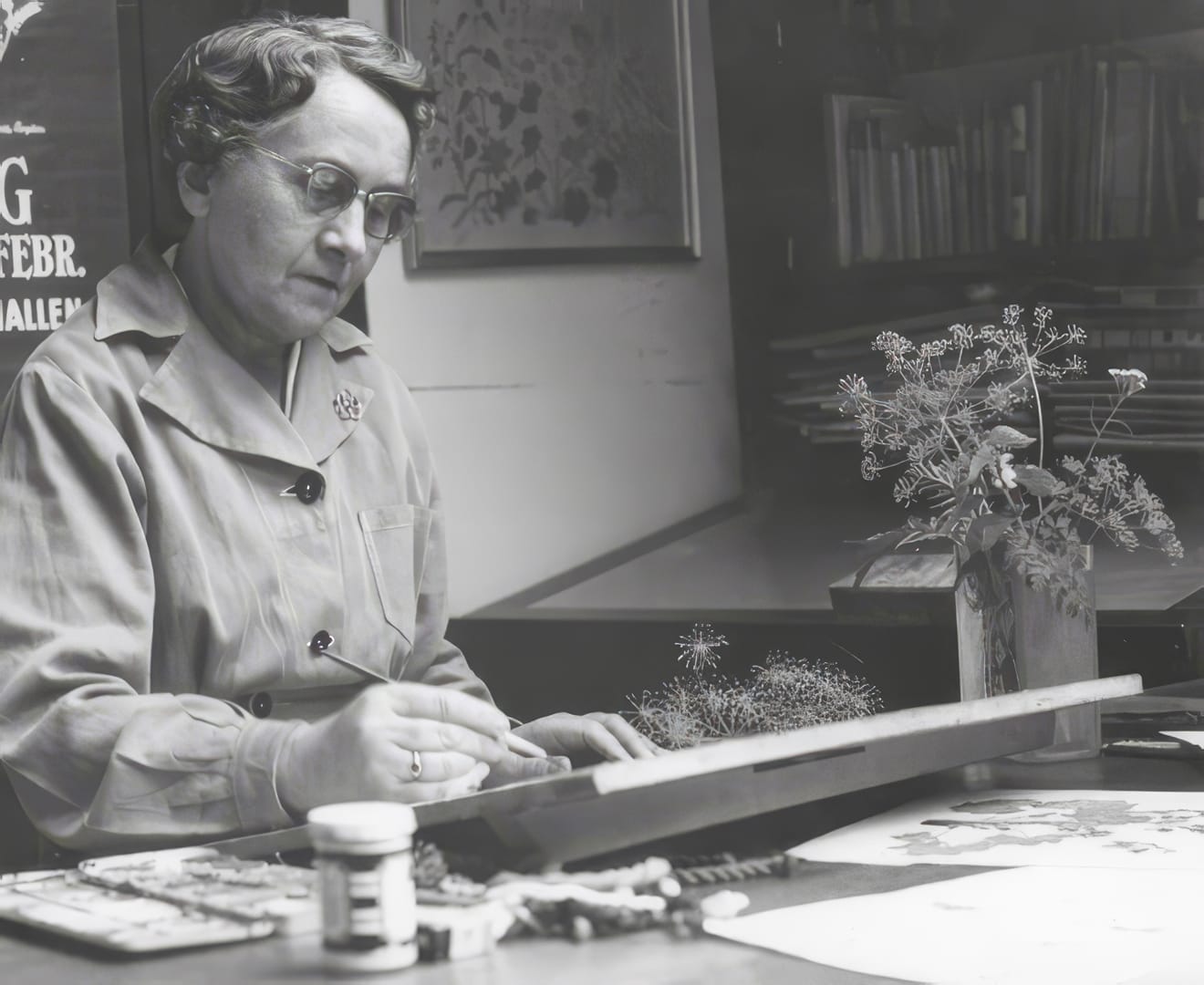
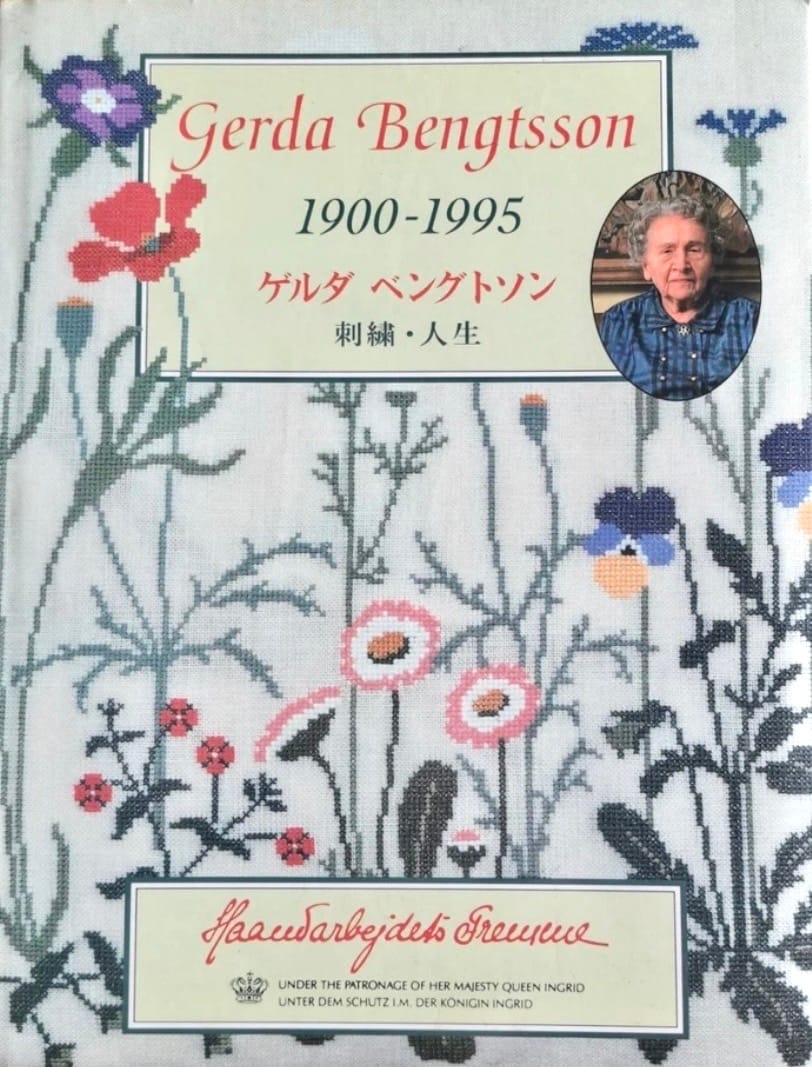
After studying decorative arts such as design and textiles at the Academy of Arts, she studied in Paris, where she learned Gobelin tapestry weaving and engaged in practical studies such as copying old tapestry cartoons. In 1929, the year after the Danish Handcraft Guild was founded, she received her first commission from the Guild to create a canvas stitch design. For this piece, she chose rabbits and wildflowers from 17th-century tapestries at the Cloeunès Museum. From this time onwards, she began teaching embroidery design at the Guild's craft school while also working in the Guild's studio, where she started designing for cross-stitch.
On her 75th birthday, she said, "Working in the Guild's workshop made me happy, helped me grow, and allowed me to try new things." In 1947, the masterpiece of the gooseberry cushion was born, and since then, tens of thousands of designs have been created, making 20th-century Danish embroidery a global phenomenon.
Not only is the author highly regarded for capturing the essence of nature in wildflowers and trees, but also for depicting people relaxing in gardens and parks with a touch of humour using minimal stitches.
Memory: Her handwritten letter to Mikiko Yamanashi, whom I remember as someone who always wore an unfussy navy dress and loved wildflowers, is carefully preserved in the YHI archives.
Photo credit:Danish Handcraft Guild Association
Ida Winckler
Born in 1901. Studied design and embroidery at the School of Decorative Arts. After graduating, she worked as an in-house designer for the Guild's atelier. Her role was to create new patterns, mainly samplers, from the Guild's vast collection. This work refined her own aesthetic, leading to the creation of beautiful masterpieces in her building, map, and ship series.
She is acclaimed as the foremost expert in techniques for transferring drawings to cross-stitch, which is said to be due to her unwavering commitment to protecting the qualities of an artist.
Edith Hansen
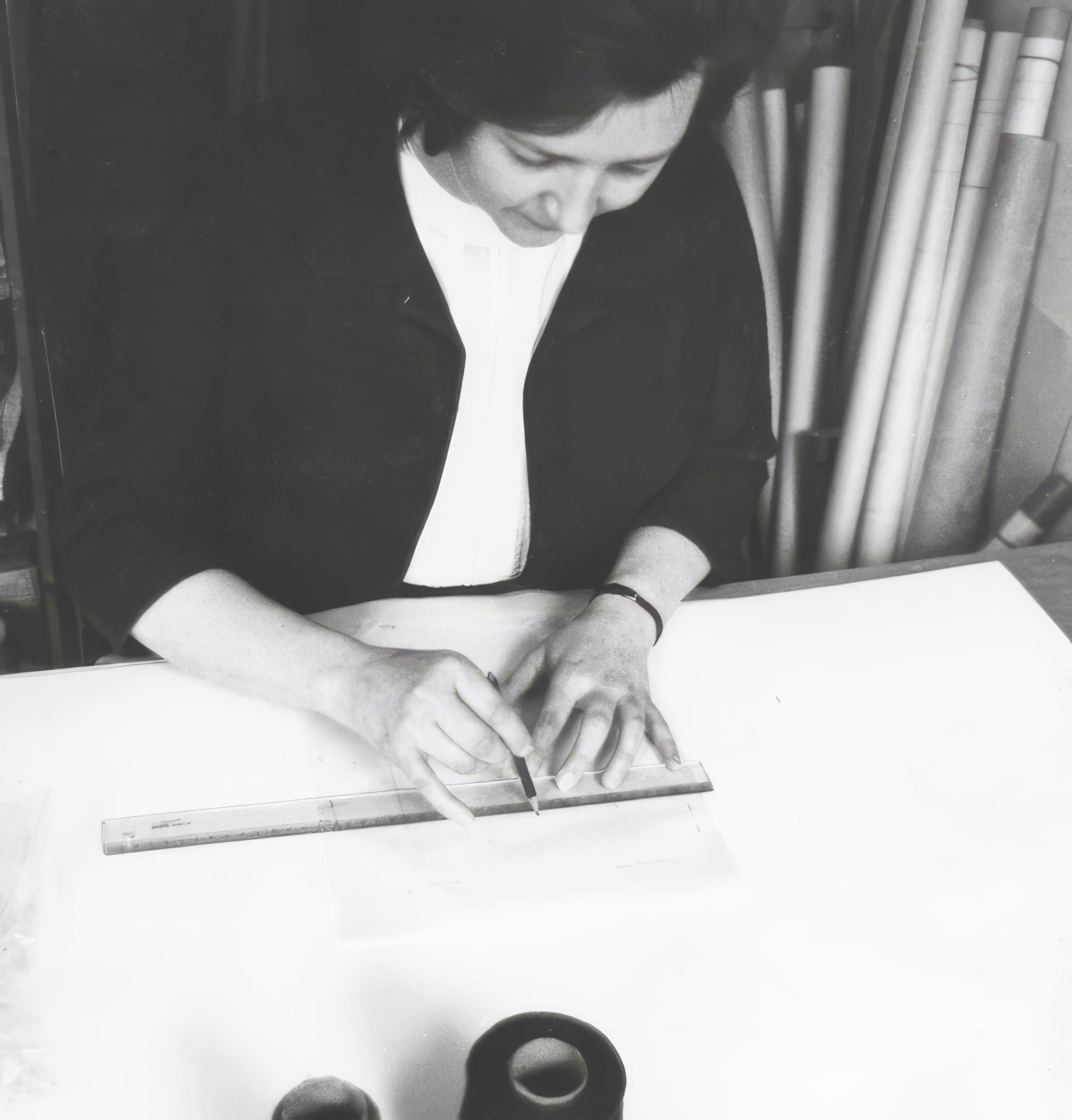
Born in 1926. Graduated from the Danish College of Arts and Crafts. From 1959, while teaching design and embroidery at her alma mater, she worked as a designer in the Guild's atelier.
Her designs express the effects of light with a skillful sense, and her original sketches are often collages made using paper shapes such as circles and squares. She also excels at gold thread embroidery, creating a unique use of thread and stitch that can be called the "Edith style".
He is also known as a collector of old embroidered works, and his restoration work on the old Gobelin tapestries at Rosenborg Castle is highly regarded.
Photo credit:Danish Handcraft Guild Association
Her Majesty Queen Margrethe
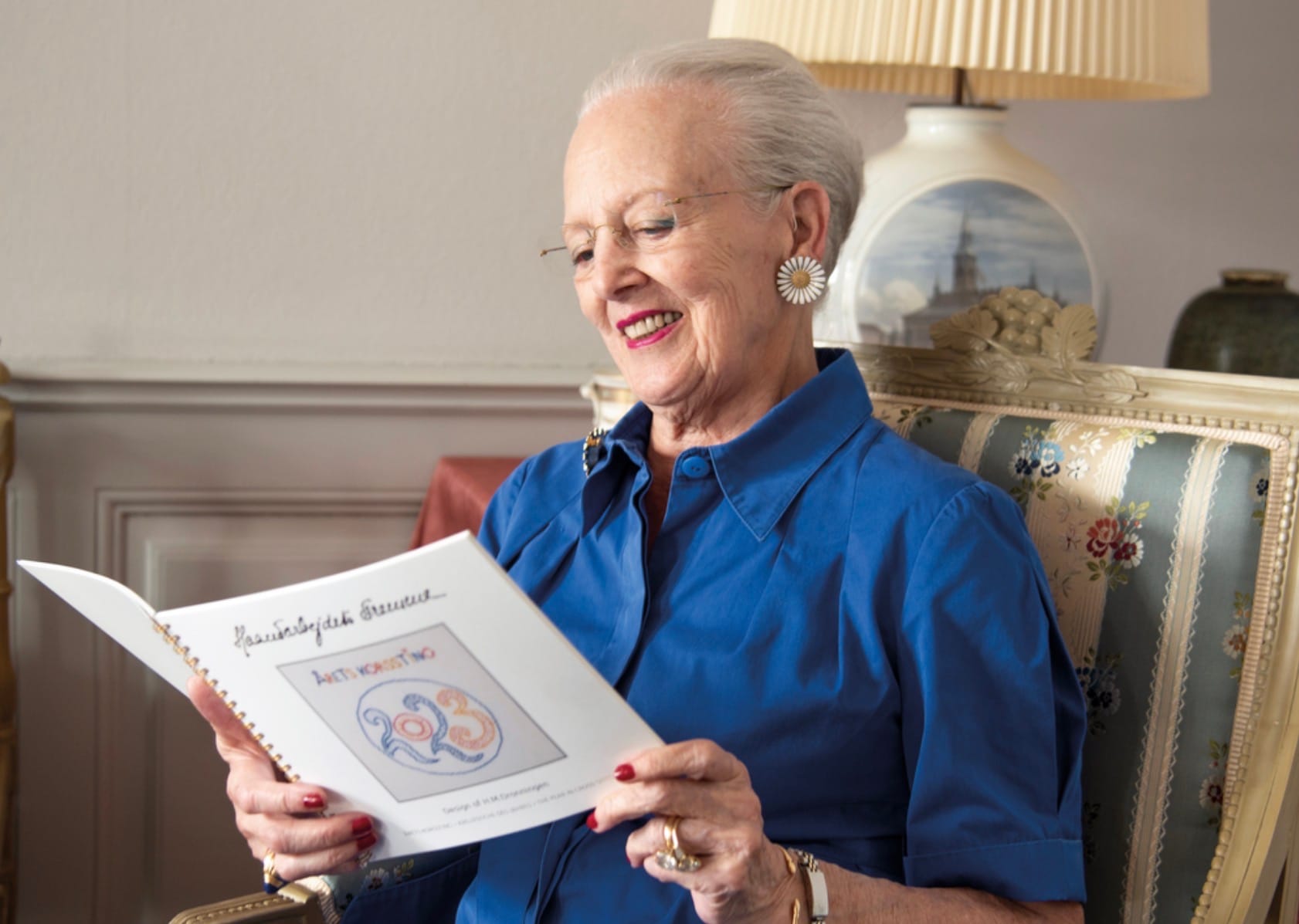
Born in 1940. Ascended the Danish throne in 1972. During her time as princess, she studied political science and archaeology at the University of Copenhagen and the University of Cambridge. She is fluent in several languages and has translated numerous works and is also a published author. Her artistic talents include a love of painting and embroidery, stating that "this is very important for expressing myself."
Even after abdicating, she remains active as an artist in a wide range of fields, including stamp design, illustrations, costume design for Andersen-themed TV shows and stage performances, and film direction.
She also created many excellent designs for the Danish Handcraft Guild, such as ”Danish Weather.” By creating three-dimensional compositions from flat cross-stitch patterns, she brought a fresh perspective to the world of embroidery. When Her Majesty embroiders herself, she prefers freehand embroidery without a pattern.
Photo credit:Danish Handcraft Guild Association
Memory:In 1981, I attended the 'Exhibition of Danish Decorative Arts', co-hosted by the Danish Handcraft Guild, accompanied by HRH Prince Henrik. For the 2003 exhibition 'The World of Denmark in Embroidery', we were honourably lent 11 embroidered works by HM Queen Margrethe, which made for a splendid display.
Ole Kortzau
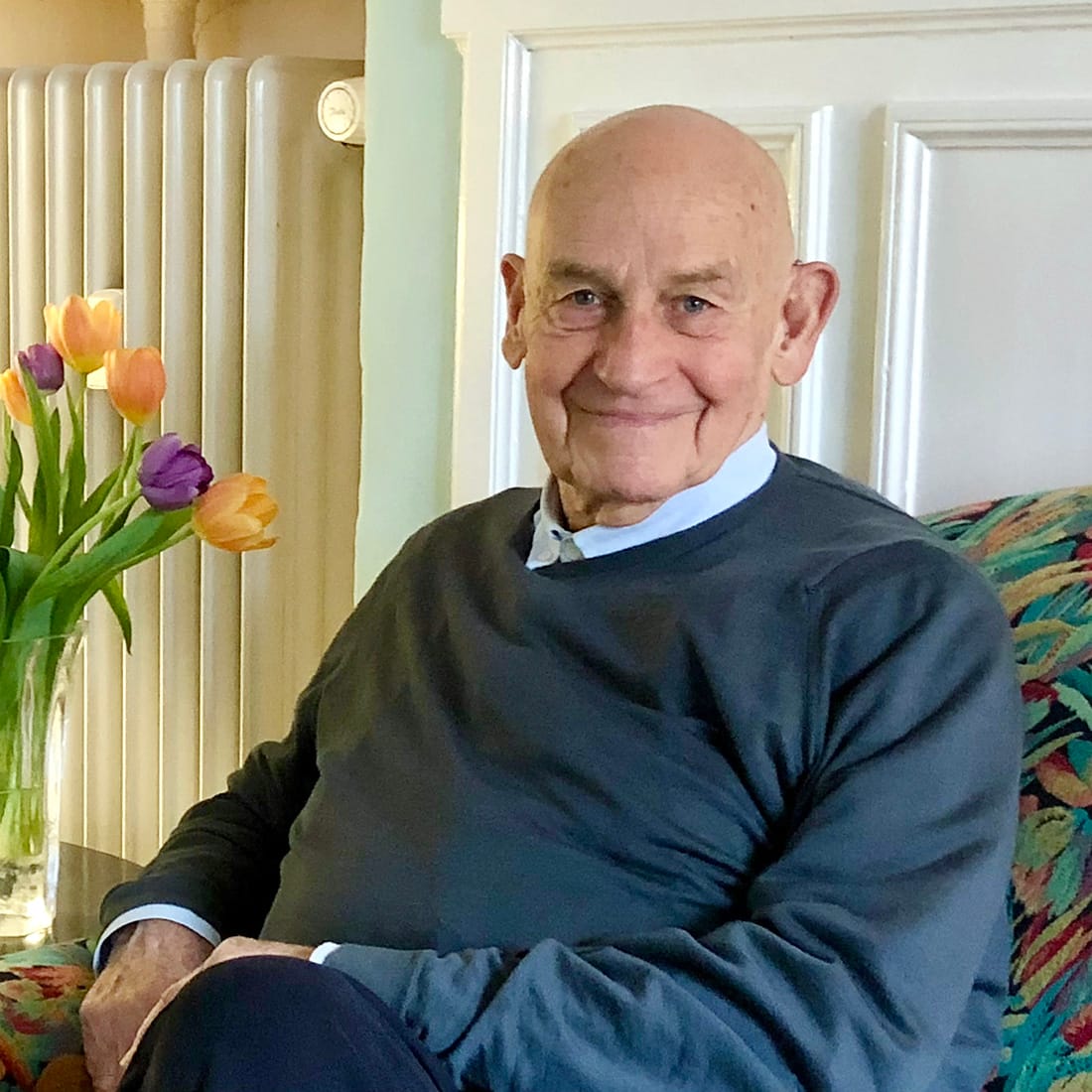
Born in 1945. An architect who is also active in interior design, including textile design.
It was his paintings, in particular, that made his name famous, with their simple depiction of Danish life in simplified shapes and colours.
In 1990, he created his first cross-stitch design for the Danish Handcraft Guild calendar, depicting changing seasons and flora under the Danish sun with masterful colour palettes and simple lines.
This shows new possibilities for embroidery designs, and the light landscape designs have been loved for generations.
https://houseofneedlework.com/en/designer/ole-kortzau
Memory: I cannot forget the brightness, seemingly radiating from all the works, when I visited your studio. I was captivated by the myriad of colour choices and designs that leave the viewer with a refreshing and happy feeling. When you told me, "I designed the logo for Nakazawa Dairy in Japan," and I looked at the products again in the supermarket, I smiled, seeing the simple yet bright design typical of Mr Corzo, reminiscent of cross-stitch.
Bjørn Wiinblad 1918-2006
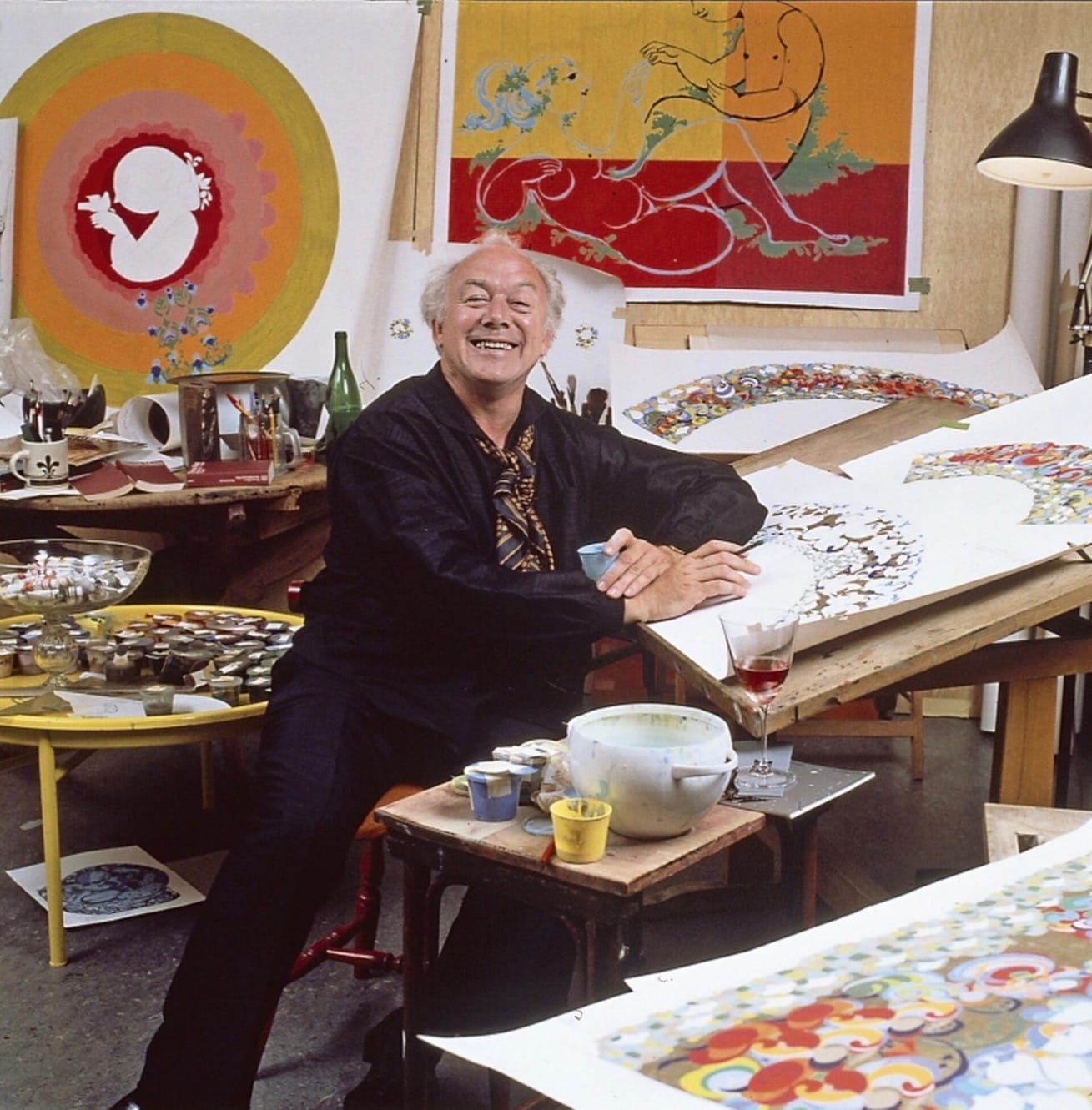
A leading Danish artist of the 20th century, who painted many pictures as an artist and was also involved in the production of ceramics and jewellery as a designer.
He also created his own unique depictions of women and organic patterns playing with nature for the Danish Handcraft Guild's embroidery.
Highly artistic cross-stitch works are renowned and widely praised. His “happy fantasies,“ drawn by a man who loved to please people, have garnered a large fanbase worldwide.
https://en.wikipedia.org/wiki/Bjørn_Wiinblad
Memory: In 2002, when Yamanashi Hemslöjd was supporting the public exhibition of Danish Handcraft Guild works through its local subsidiary HF Galleri in Copenhagen, we held a Wiinblad exhibition and deepened our friendship by your visit
To be continued...